Why Your Trailer ABS Light Stays On and What to Check Before Dispatch
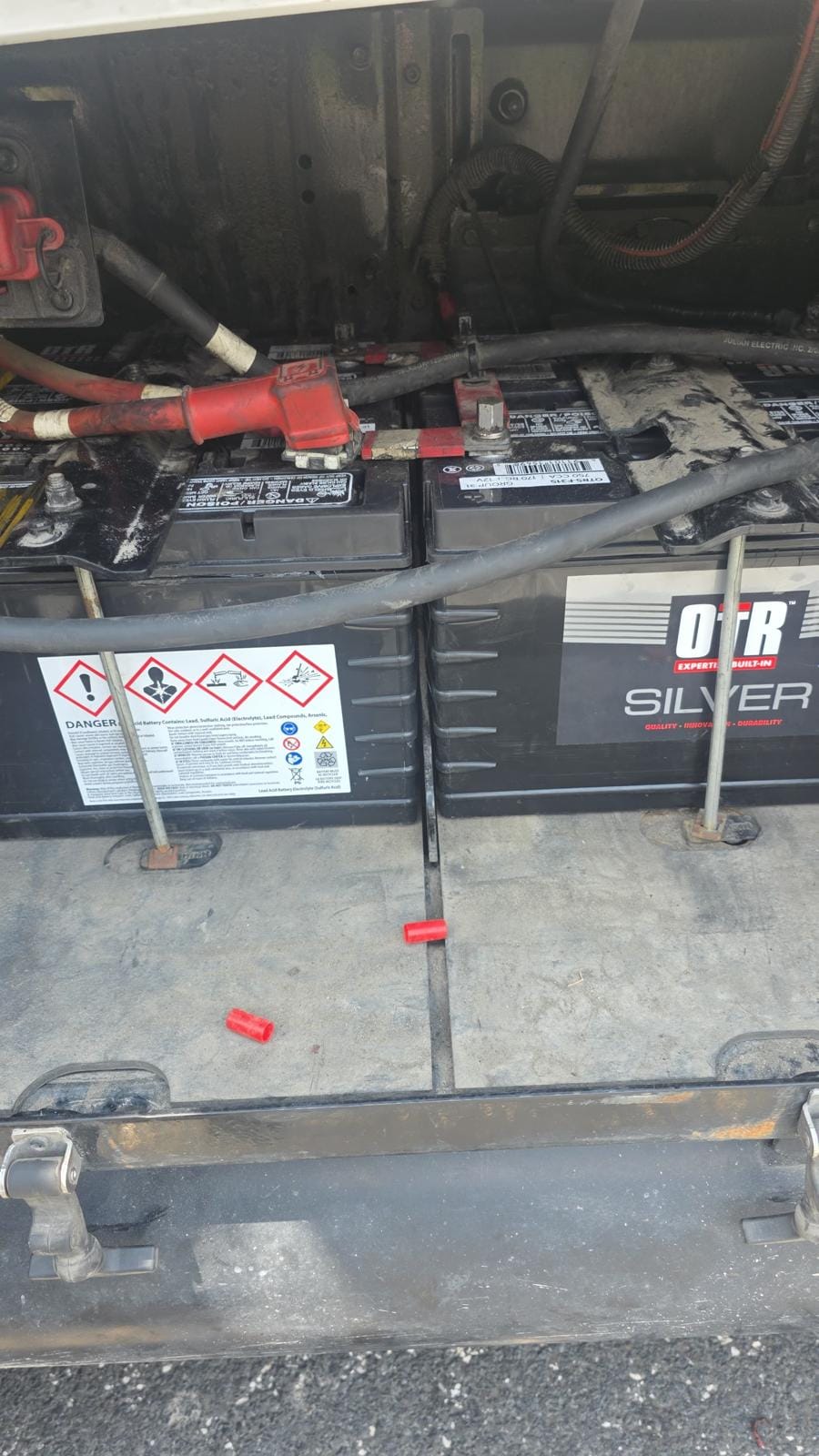
A trailer ABS light that stays on after its startup check means the trailer’s anti-lock braking system needs attention before dispatch. A wheel-speed sensor, damaged wiring, poor electrical connection, power or ground fault, or ABS component may be responsible. The service brakes may still apply, but you cannot assume the trailer has working anti-lock protection. If the lamp never comes on during its expected self-check, that also calls for investigation.
Start with the checks a driver can make safely: identify which warning lamp is lit, observe when it appears, inspect the seven-way electrical connection, and look for visible damage at the trailer wheels and wiring. Do not send a trailer with a persistent warning onto the highway on the assumption that the light will clear itself. Black Gold Mechanic handles mobile truck and trailer electrical diagnostics in Central Texas when those first checks do not resolve the problem.
If you are already on a highway shoulder, safety comes before diagnosis. Secure the vehicle, follow your company’s roadside procedures, and do not work beneath the trailer or beside traffic to trace a wire. Give your mechanic and dispatcher the exact lamp behavior and location so they can decide what can be checked safely on-site.
What the trailer ABS warning tells you
Anti-lock braking systems monitor wheel speed and adjust brake application when a wheel is about to lock during braking. The trailer ABS warning lamp reports a problem detected by the trailer system. On most equipped trailers, the lamp illuminates briefly during an initial check and then goes out. The precise sequence can vary with the system and how it receives power, so use the trailer’s service information when the behavior is unclear.
A lamp that stays on or returns while driving generally indicates that ABS protection may be unavailable or impaired. It does not prove that every service brake has failed, and it does not prove that the brakes are safe. An air leak, dragging brake, or wheel-end problem may exist alongside an electrical ABS fault. Treat those as separate conditions that require inspection.
It also matters which lamp you see. The trailer’s external ABS lamp, a trailer ABS indication in the tractor cab, and the tractor’s own ABS warning are not interchangeable diagnoses. A cab warning may direct attention to the trailer, but it does not identify a failed wheel-speed sensor by itself. Record the location of the light before anyone starts replacing parts.
The fast, safe checks before dispatch
We use a simple order of operations at Black Gold Mechanic: identify the warning, inspect the connection, look for physical damage, then test the circuit and retrieve fault information. That sequence helps separate a visible connection problem from a fault that needs diagnostic equipment. It also keeps drivers from handling energized wiring or crawling under a trailer to chase a warning light.
1. Confirm when and where the light appears
With the trailer parked in a safe location, note whether the lamp briefly lights and goes out, remains illuminated, never lights when expected, or comes on only after the trailer moves. Tell dispatch whether the warning appeared immediately after hooking up, after recent wheel-end or brake work, or while driving over bumps. Those details narrow the search.
- Stays on after the initial check: An active fault or unresolved circuit problem needs diagnosis.
- Appears after the trailer moves: A wheel-speed signal or intermittent wiring fault is possible, but a code and inspection are needed to confirm it.
- Flickers with movement: Check for a loose connection or damaged harness before assuming the controller has failed.
- Never lights when expected: Do not call the system healthy just because the warning is dark. The lamp, its circuit, or system power may need checking.
A quick video of the startup behavior can help a technician, especially when the fault is intermittent. Do not try to reproduce it by driving a trailer that also shows poor braking, an air leak, or a wheel-end hazard.
2. Check the seven-way plug and tractor socket
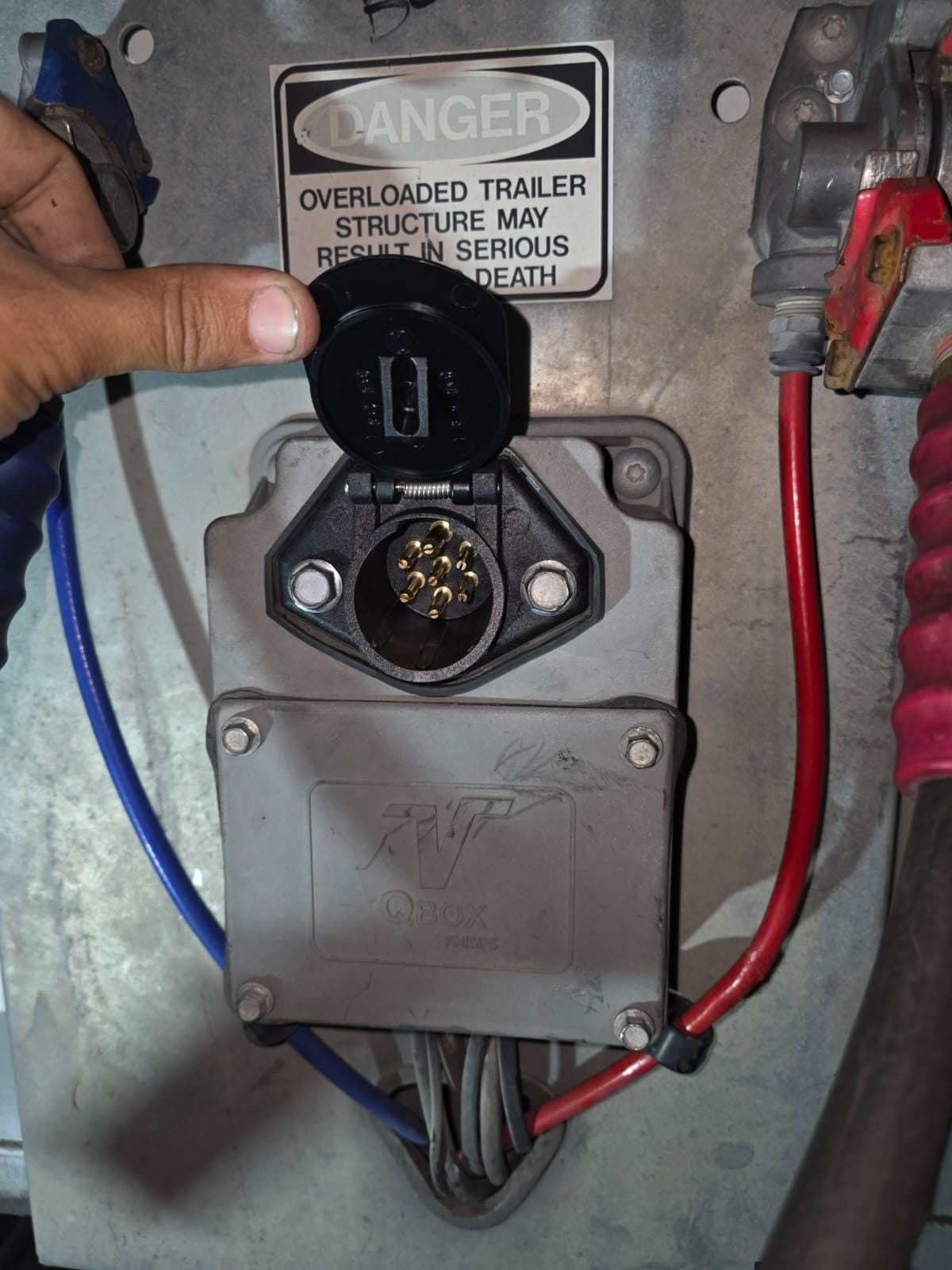
With the vehicle secured and the electrical connection handled according to your company’s procedures, inspect the trailer plug and tractor socket. Look for moisture, corrosion, bent or recessed contacts, heat damage, a broken housing, or a connection that will not stay firmly seated. Check the visible pigtail for crushed insulation or a section stretched tight during turns.
If the plug is visibly intact but was not fully seated, reconnect it securely and repeat the normal startup observation. A light that goes out after reconnecting does not excuse a loose or damaged terminal. If the warning returns, the connection still needs attention. Do not force a plug into a damaged socket, bridge terminals with wire, or substitute a larger fuse to keep the system powered.
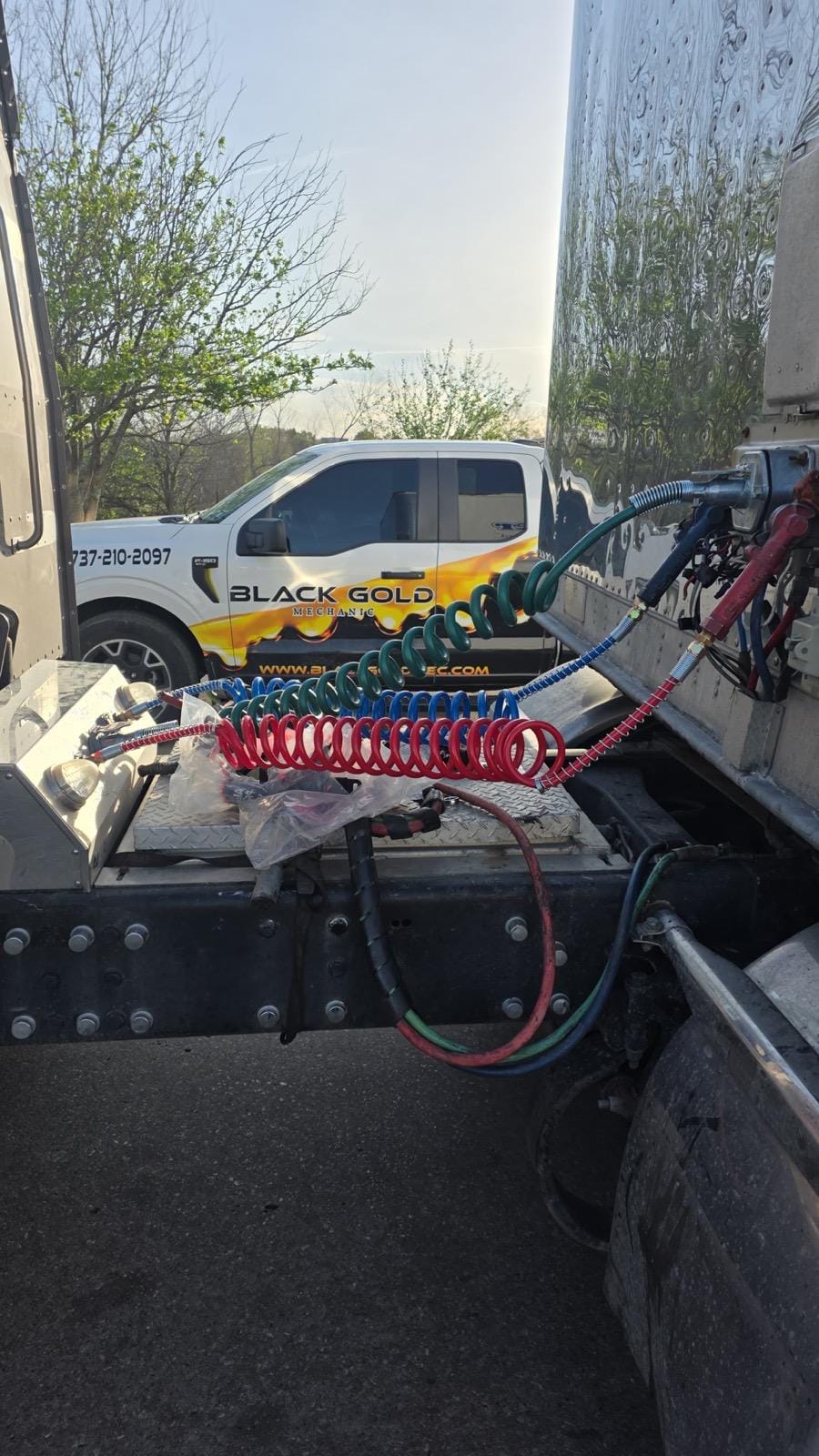
3. Look for visible wiring and wheel-end trouble
From a safe position, look along accessible trailer wiring for loose clips, exposed conductors, or a harness hanging near a tire or suspension component. Check the wheel area for obvious damage, leaking wheel seals, or signs that a brake is dragging or overheating. Do not touch a hot hub or enter a traffic-side work area for a closer look.
A damaged wire can produce an ABS fault, but a leaking seal or damaged wheel end can demand attention for reasons beyond the warning lamp. If you see smoke, a wheel sitting abnormally, fluid contamination around a brake, or a tire rubbing loose wiring, stop the inspection and arrange qualified roadside service. A lamp reset will not make a mechanical wheel-end problem safe.
4. Separate the trailer symptom from the tractor symptom
If fleet procedures permit and the equipment is safely parked, note whether the tractor’s own ABS warning remains on when the trailer is disconnected electrically. A trailer warning that appears with one particular trailer points the inspection toward that trailer and its connection, but it is not a conclusive component diagnosis. The tractor socket or pigtail can still be involved. Comparing with known-good equipment may help a qualified fleet technician isolate the issue, provided the coupling and electrical procedures are followed safely.
Do not repeatedly unplug and reconnect a live, damaged connector in the hope of clearing the light. Once the basic observations are recorded, move to proper circuit testing instead of treating a temporary change in lamp behavior as a repair.
Why the light stays on: the faults a mechanic should distinguish
Wheel-speed sensor and sensor wiring
Trailer ABS relies on wheel-speed signals. A sensor that is loose, damaged, contaminated, or unable to read its rotating tone ring can trigger a warning. The cable can fail as well, particularly where it is clipped to an axle or routed through an area that moves with the suspension. An intact-looking cable does not rule out an internal break or a poor connector.
A technician should identify the affected circuit from the available diagnostic information, then inspect the sensor, mounting position, connector, and cable routing. Electrical measurements and signal checks must follow the applicable ABS manufacturer’s procedure. Replacing a sensor simply because the light is on can miss a damaged extension cable or a wheel-end issue.
Tone ring and wheel-end condition
The rotating tone ring provides the pattern the sensor reads. Physical damage, contamination, or wheel-end movement can disrupt that signal. If a wheel seal is leaking, the job is not finished by wiping off the sensor. The source of contamination and the condition of the wheel end need inspection, as does the braking surface if oil or grease has reached it.
This is one reason a warning that returns after sensor work deserves a closer look. The sensor may have been the messenger rather than the underlying failure. Do not adjust or disassemble a wheel end on a highway shoulder without the proper equipment and a safe work area.
ABS power, ground, fuse, and main harness
The controller must receive dependable power and ground. A corroded seven-way contact, a damaged junction-box connection, a blown fuse, or a chafed harness can interrupt it. If several warning symptoms began at hookup, inspect the shared electrical connection early. If a fuse has opened, find the cause before replacing it. A second blown fuse is evidence to investigate, not a reason to keep feeding the circuit new fuses.
For a technician, a voltage reading at the tractor socket is only the beginning. The circuit must be checked at the relevant trailer test points using the wiring information for that trailer. A connection can appear satisfactory at one point yet fail farther along the harness or under electrical load. Correct testing avoids replacing an ABS module for a poor ground.
ABS controller or modulator faults
An ABS controller or modulator can have a fault, but the warning lamp alone cannot establish that either part needs replacement. A technician should record fault information and verify the relevant wiring, power, ground, and connected components first. Follow the system-specific service procedure for any controller or valve testing. An expensive component replacement based only on a dashboard light can leave the original fault in place.
These categories are a diagnostic path, not a ranking of how often parts fail on every trailer. The useful question is not “Which part usually goes bad?” It is “What does this trailer’s fault information and circuit testing show?”
What a qualified trailer ABS diagnosis should include
When the light persists after the safe visual checks, the next step is controlled testing. Black Gold Mechanic provides on-site electrical diagnostics and ABS repair for heavy-duty trucks and commercial trailers in its Central Texas service area. The exact work depends on the trailer, the available diagnostic information, parts, and whether the location is safe for repair.
- Record the complaint and lamp behavior. Identify the trailer and tractor involved, when the light appeared, and whether braking or air-system symptoms are present. An intermittent complaint needs those operating conditions documented.
- Retrieve and preserve fault information. Use the applicable diagnostic method for the installed ABS system. Record active and stored information before clearing anything. A stored fault can be useful evidence even if the lamp happens to be off when the mechanic arrives.
- Inspect the named circuit and nearby hardware. Check the connector, harness routing, wheel-speed sensor, tone ring, or other component indicated by the fault. The code identifies a path to test, not automatic permission to replace a part.
- Verify power and ground where they matter. Follow the correct wiring diagram and manufacturer’s test procedure. Repair damaged terminals or wiring with appropriate materials and secure the harness away from moving parts and sharp edges.
- Test the repair. Repeat the required self-check and any manufacturer-specified verification. Some faults need wheel rotation or a controlled movement test to confirm that a usable speed signal has returned. Clear fault information only as directed and confirm the warning does not reappear.
- Document the outcome. Record the reported symptom, fault information, repair, and final lamp behavior. If the system cannot be verified or another brake defect remains, keep the trailer out of service pending further work.
That last step matters to a dispatcher. “The light went out” is less useful than knowing what failed, what was repaired, and how the technician verified it. If the lamp is intermittent, the fleet should retain enough detail to recognize a recurring fault on the same trailer.
Can the trailer go out if its ABS light is on?
A persistent trailer ABS warning is not a normal dispatch condition. Conventional service braking may remain, but anti-lock protection may not be available when it is needed. The right decision is to have the fault evaluated and repaired before assigning the trailer to a run, rather than assuming that air pressure or a successful low-speed brake application proves ABS works.
If the warning accompanies an air leak, weak or uneven braking, a dragging brake, visible wheel-end damage, a damaged electrical connection, or loose wiring near a tire, do not dispatch the trailer. Address the mechanical or electrical hazard directly. Follow applicable inspection requirements and your fleet’s maintenance procedures for the final return-to-service decision; a warning light by itself does not identify every regulatory consequence of the defect.
If this occurs on the road, move to a safer location only when the vehicle’s condition permits. Use required warning devices and contact your dispatcher and a qualified repair provider. For a broader roadside brake triage guide, see our article on troubleshooting air brake failures before calling for help. If the trailer cannot be inspected safely where it sits, the next decision is how to get it to a suitable repair location, not how to silence the lamp.
What to tell dispatch and the roadside mechanic
A precise service call can shorten the time spent locating the fault. Before you call, gather what you can without moving into an unsafe position:
- Your location, direction of travel, and whether the trailer is on a shoulder, at a truck stop, or in a yard.
- The trailer number and available make or model information.
- Whether the light is on the trailer, in the tractor cab, or both.
- Whether it stays on immediately, appears after moving, or comes and goes over bumps.
- Whether you recently connected this trailer or had wheel-end, brake, or electrical work performed.
- Any air leak, brake drag, overheating, wheel-end damage, or visibly damaged cable.
- Any fault information already retrieved by your fleet, without clearing it first.
Send a photo of a visibly damaged plug or harness if it is safe to take one. Do not try to photograph a wheel end from underneath an air-suspended trailer or next to live traffic. If you are stranded near Austin and need help describing the situation, our guide to what to tell a roadside mechanic covers the details that make a dispatch call more useful.
Best practices for fleet managers
Trailer ABS checks work best as part of a consistent pre-dispatch and maintenance process, not as a reaction to a light seen at the gate. Drivers should know what normal lamp behavior looks like on their equipment and who receives a defect report. Maintenance staff should be able to match a recurring complaint to a trailer number and previous repair record.
- Inspect the connection at each hookup. A damaged seven-way plug or pigtail is easier to identify in a yard than after departure.
- Include wiring in trailer inspections. Look at harness supports around axles, suspension travel areas, and junction boxes. Secure loose wiring before it rubs through.
- Connect ABS complaints to wheel-end work. If a warning appears after brake, hub, tire, or suspension service, inspect disturbed sensor wiring and nearby hardware before ordering components.
- Save fault and repair history. Repeated warnings on the same trailer should prompt a review of routing, connector condition, and prior test results, rather than another isolated parts replacement.
- Require a verified finish. The trailer should pass the applicable lamp check and any required diagnostic verification before it returns to the dispatch pool.
Black Gold Mechanic also offers on-site fleet maintenance in its service area. For fleets managing multiple trailers, a planned inspection of connections and wiring can be scheduled in a yard, where technicians have safer access than they would on a highway shoulder. Our guide to commercial trailer problems a mobile mechanic can fix in Hutto covers other issues worth reporting before a trailer leaves the property.
Trailer ABS light FAQ
Does the ABS light mean my trailer has no brakes?
No. A trailer can retain conventional service braking when its ABS has a fault. That distinction does not make the trailer ready for dispatch: anti-lock protection may be impaired, and the brakes still need their own inspection if their operation is in doubt.
Why did the warning start right after I hooked up?
Begin with the visible seven-way plug, tractor socket, and pigtail. A connection that is loose, wet, corroded, or damaged can affect the trailer’s electrical supply. The timing is a clue, not proof: a trailer fault may simply become apparent when the system receives power.
Can I clear the warning by unplugging and reconnecting the trailer?
Reseating a loose plug may restore a connection, but it is not a complete diagnosis. If the warning returns or the contacts are damaged, inspect and repair the connection. Record available fault information before clearing codes, then verify the system after the actual repair.
Why does the ABS light come on only after I start driving?
Some faults become apparent when the system evaluates wheel-speed signals as the trailer moves. An intermittent cable or connector can also react to vibration. Give the mechanic the speed and conditions when it appeared if you know them, and let the applicable diagnostic procedure identify the circuit.
Can a leaking wheel seal be related to an ABS fault?
Yes. Wheel-end contamination or movement can interfere with a sensor’s signal. A leaking seal may also affect brake components, which is a separate safety concern. The correct response is a wheel-end and brake inspection, not just a sensor reset.
Is a dark ABS lamp always good news?
No. If a lamp never illuminates during the expected self-check, the lamp circuit or system power may have a problem. Check the sequence specified for that trailer’s ABS equipment rather than assuming a lamp that stays dark proves the system works.
Can mobile repair address a trailer ABS fault?
Many connection, wiring, sensor, and diagnostic tasks can be assessed on-site when access and conditions are safe. A wheel-end repair or a fault requiring unavailable parts may need additional arrangements. Describe the symptoms and location to the mobile mechanic so the scope can be confirmed before work begins.
Before the next load
Do not let the trailer ABS light become an accepted dashboard fixture. Confirm which lamp is on, check the seven-way connection and visible wiring safely, and report any brake or wheel-end symptom immediately. If the warning persists, get the fault diagnosed, repair the cause, and verify the system before returning the trailer to service.
For 24/7 mobile heavy-duty truck and commercial trailer assistance in the Austin and Hutto area, contact Black Gold Mechanic at (737) 210-2097. Tell us where the trailer is, what the lamp does, and whether there are any braking or air-system symptoms so we can assess the next safe step.